Oticon – history and technology
Oticon – pioneering hearing aid innovation
Founded in 1904 by Hans Demant, whose wife experienced hearing loss, Oticon was created with a deep personal mission: to empower people to live better lives regardless of their hearing ability. Today, Oticon is one of the world’s most respected hearing aid brands, known for its research-based approach and constant drive to push boundaries in audiology. The company operates under the Demant Group, which also includes other major hearing brands like Bernafon and Sonic. With more than a century of innovation, Oticon has played a central role in reshaping how hearing aids are designed and perceived—shifting the focus from just amplifying sound to supporting the brain’s natural way of making sense of sound.
Who makes Oticon hearing aids?
Oticon hearing aids are designed and manufactured by Oticon A/S, a Danish company based in Smørum, just outside Copenhagen. As a subsidiary of the global hearing healthcare group Demant A/S, Oticon benefits from an extensive R&D infrastructure and deep clinical expertise. The company employs thousands of professionals across the globe and operates in over 20 countries. This global presence ensures that Oticon remains at the forefront of technological advancement while delivering consistent support and quality to audiologists and end-users alike. Oticon’s production is guided by rigorous quality control and sustainability standards, ensuring that each hearing aid meets the highest benchmarks in performance and reliability.
What is the best Oticon hearing aid?
Oticon offers a range of premium hearing aids designed for different levels of hearing loss, lifestyle needs, and cosmetic preferences. Currently, the Oticon Intent 1, released in 2024, is considered one of their most advanced models. It features second-generation Deep Neural Network (DNN) technology combined with four intelligent sensors that understand your physical and social environment—resulting in more personalized, adaptive listening. Oticon Intent is particularly powerful in dynamic group settings where background noise and movement often make conversation challenging.
Other flagship models include:
-
Oticon Real: engineered to provide a more natural listening experience by reducing disruptive sound elements like wind, sudden noise, or handling sounds.
-
Oticon More: the first hearing aid to use a deep neural network trained on 12 million real-life sound scenes, offering access to the full soundscape for a richer, more nuanced experience.
-
Oticon Own: a line of custom in-the-ear hearing aids that are nearly invisible and tailored to the wearer’s unique ear anatomy and hearing needs.
All these models integrate Oticon’s proprietary BrainHearing philosophy—aimed at supporting the brain’s natural ability to process sound instead of overwhelming it with amplified noise. This approach results in clearer speech understanding and less listening fatigue throughout the day.
Where to buy hearing aid supplies and accessories
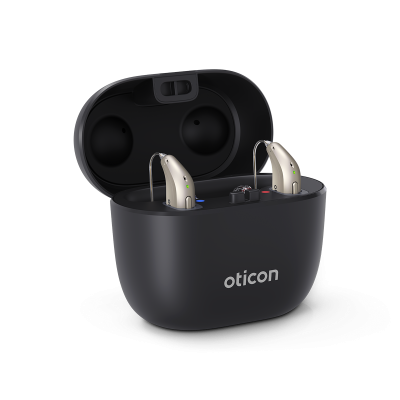
At Japebo, we offer a wide selection of Oticon accessories, including wax guards, domes, batteries, chargers, and wireless streaming devices—all tailored to specific Oticon hearing aid models.
In addition, Oticon’s accessory lineup includes:
-
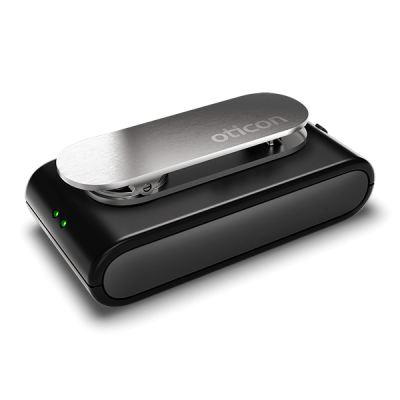
ConnectClip – enables hands-free phone calls and audio streaming from smartphones and tablets.
-
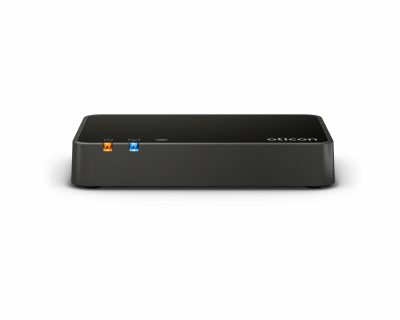
TV Adapter 3.0 – streams high-quality audio directly from the television to the hearing aids.
-
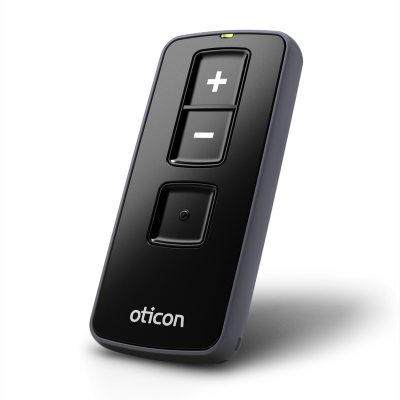
Remote Control 3.0 – allows users to adjust volume and switch programs discreetly and easily.
Purchasing from authorized sources ensures you receive genuine products that preserve device performance and protect your hearing investment.
What is the life expectancy of Oticon hearing aids?
On average, Oticon hearing aids last between 3 to 7 years, though many users find their devices remain functional even longer with proper care. Several factors influence the lifespan, including usage patterns, environmental exposure (moisture, dust, sweat), and whether the hearing aids are rechargeable or use traditional batteries. Regular cleaning, changing wax guards and domes, and avoiding physical damage are key to extending longevity. Oticon also recommends annual check-ups with your hearing care provider to ensure that the device is still aligned with your current hearing needs and performing optimally.
When a hearing aid begins to show signs of reduced performance—such as diminished sound quality, connectivity issues, or shortened battery life—it may be time to consider an upgrade. Newer models often come with improved features such as AI-powered personalization, extended battery life, and smarter connectivity with smartphones and home devices.
Want to know more about Oticon hearing aids?
If you want to know more about how to care for your Oticon hearing aids, we have some guides on “How to clean” and “How to pair“. We also have some pages that give you extended knowledge on how to use Oticon’s chargers as well as their batteries.